This post may contain affiliate links. If you make a purchase through these links, we may earn a small commission at no extra cost to you. We only recommend products and tools we genuinely believe can help you better understand, care for, or live well with your Doberman.
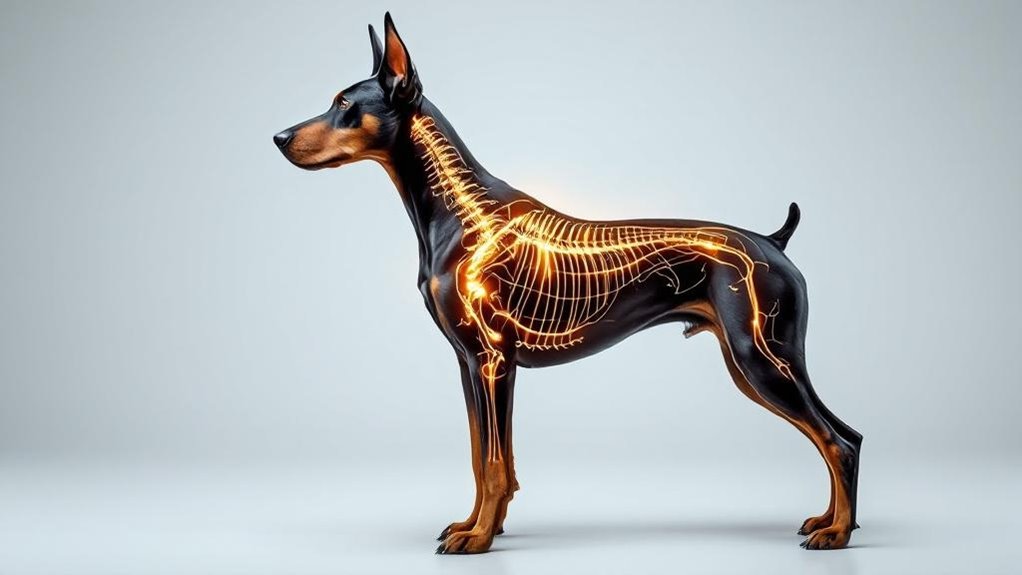
Wobbler Syndrome, cervical vertebral instability affecting your Doberman’s spine, creates what you might experience as a “nervous system lock”—spinal cord compression disrupting neural communication between brain and limbs. You’ll notice progressive gait abnormalities, hind limb weakness, and incoordination as vertebral malformation restricts movement capability. Dobermans face genetic predisposition to this condition, particularly males, making early recognition of stumbling, dragging, and staggering essential before symptoms worsen. Diagnosis requires advanced imaging like MRI alongside neurological exams, determining whether conservative management or surgical intervention best suits your dog’s severity level.
- Key Takeaways
- What Is Wobbler Syndrome (Cervical Vertebral Instability)?
- Early Warning Signs: Gait Changes, Weakness, and Incoordination
- How Cervical Instability Damages Your Dog’s Spine
- Why Dobermans Are Prone to This Condition
- Getting a Diagnosis: Imaging and Veterinary Testing
- When Your Dog Needs Surgery vs. Non-Surgical Treatment
- Managing Mild Wobbler Syndrome Without Surgery
- Medications for Wobbler Syndrome Symptom Relief
- Physical Therapy for Wobbler Syndrome Recovery
- Activity Restrictions and Safe Exercise Guidelines
- Long-Term Outlook and Recovery Expectations
- Monitoring Progress and Knowing When to Escalate Care
- Emergency Warning Signs Requiring Immediate Vet Visit
- Frequently Asked Questions
- Conclusion
Key Takeaways
- Wobbler Syndrome causes spinal cord compression in Dobermans, leading to nervous system dysfunction and coordination difficulties.
- Male Dobermans have genetic predispositions to nervous system disorders, with environmental stressors potentially exacerbating underlying vulnerabilities.
- Early symptoms include gait abnormalities, limb weakness, and incoordination that worsen without prompt veterinary intervention.
- Conservative management involves physical therapy, pain medications, and controlled exercise to stabilize the spine and improve mobility.
- Sudden paralysis, seizures, or severe tremors require immediate emergency veterinary care to prevent neurological crisis.
What Is Wobbler Syndrome (Cervical Vertebral Instability)?
Wobbler Syndrome, formally known as Cervical Vertebral Instability (CVI), is a neurological condition that primarily affects large breed dogs, including Dobermans, in which the cervical vertebrae—the bones comprising the neck portion of the spine—either malform or become unstable, thereby compressing the spinal cord and disrupting neural communication.
When you understand this condition, you recognize that the resulting spinal cord compression interferes with the transmission of signals between your dog’s brain and body. The manifestations you’ll observe include wobbling, coordination difficulties, and weakness, particularly affecting the hind limbs.
The condition typically emerges in middle-aged dogs, though onset can occur between six months and three years. You should recognize that the severity of compression directly correlates with symptom intensity and treatment options, making accurate diagnosis essential for determining whether your dog requires medical management or surgical intervention.
Early Warning Signs: Gait Changes, Weakness, and Incoordination
Because cervical vertebral instability compresses the spinal cord, it disrupts the neural pathways responsible for coordinating movement and maintaining muscular strength, which means you’ll likely notice observable changes in your Doberman’s physical performance before more severe symptoms develop.
Gait abnormalities—including stumbling, dragging hind legs, or staggering walks—represent early indicators that the nervous system isn’t functioning effectively.
Simultaneously, you may observe weakness in the limbs, manifesting as difficulty standing, reluctance to move, or diminished strength in the hindquarters.
Incoordination, or ataxia, appears as unsteadiness during both movement and rest. These warning signs typically progress gradually, intensifying your dog’s struggle with routine activities like climbing stairs or jumping.
Recognizing and reporting these neurological distress indicators to your veterinarian enables timely intervention.
How Cervical Instability Damages Your Dog’s Spine
The vertebrae in your Doberman’s neck are designed to work together as a stable unit, but cervical instability disrupts this structural integrity by allowing excessive movement between individual cervical vertebrae, which then compresses the delicate spinal cord nestled within the vertebral canal. This compression triggers inflammation and nerve damage, progressively impairing neurological function. You’ll observe corresponding symptoms as spinal cord tissue deteriorates.
| Damage Stage | Structural Changes | Neurological Impact | Clinical Signs |
|---|---|---|---|
| Early | Ligament laxity | Mild inflammation | Subtle gait changes |
| Moderate | Vertebral subluxation | Cord compression | Front limb weakness |
| Advanced | Chronic inflammation | Significant degeneration | Severe incoordination |
| Severe | Cord atrophy | Permanent damage | Paralysis risk |
Early intervention through advanced imaging and appropriate medical or surgical management proves essential for preventing irreversible spinal cord deterioration in your Doberman.
Why Dobermans Are Prone to This Condition
Dobermans’ vulnerability to cervical instability doesn’t arise solely from the physical trauma or degenerative processes that damage the spine over time; rather, the breed itself carries inherent biological characteristics that predispose individual dogs to developing this condition in the first place.
Genetic factors embedded within the Doberman lineage increase susceptibility to nervous system disorders, creating a foundation for neurological vulnerability that distinguishes this breed from others. Additionally, males demonstrate higher incidence rates than females, suggesting sex-linked hereditary components influence condition development.
Environmental stressors—loud noises, sudden environmental changes—exacerbate underlying predispositions by triggering acute episodes. Understanding these genetic and environmental interactions proves essential for recognizing that your Doberman’s proneness to cervical instability reflects deeply rooted biological patterns rather than isolated incidents, warranting proactive veterinary oversight and preventive management strategies.
Getting a Diagnosis: Imaging and Veterinary Testing
Once your veterinarian suspects a nervous system condition in your Doberman based on observed symptoms and behavioral changes, a systematic diagnostic approach utilizing advanced imaging and specialized testing becomes necessary to identify the underlying structural or functional abnormality.
MRI and CT scans provide detailed visualization of brain and spinal cord abnormalities, revealing structural issues that clinical observation alone can’t detect.
Concurrently, neurological examinations assess reflexes, muscle tone, and coordination, establishing baseline neurological function.
Blood tests eliminate metabolic or infectious diseases that mimic nervous system disorders.
Electromyography and nerve conduction studies evaluate electrical activity within muscles and nerves, distinguishing neuromuscular disorders from central nervous system conditions.
Your veterinarian collects thorough symptom history, including onset and progression patterns, which guides imaging selection and test prioritization, ensuring extensive diagnostic accuracy.
When Your Dog Needs Surgery vs. Non-Surgical Treatment
Once you’ve received a diagnosis through imaging and veterinary testing, you’re faced with determining whether your Doberman requires surgical intervention or can benefit from conservative management strategies. This decision hinges on recognizing specific surgical red flags such as severe neurological deterioration, loss of bladder control, or complete paralysis that don’t respond to medication.
Non-surgical approaches—including physical therapy, pain management medications, and lifestyle modifications—often prove effective for mild to moderate conditions, offering symptom relief without the inherent risks and recovery demands of operative intervention.
Your choice between medication and surgery shouldn’t rest on assumption alone; instead, consultation with a veterinary neurologist will clarify which approach addresses your dog’s particular nervous system condition most appropriately.
Recognizing Surgical Red Flags
How can you distinguish between a condition that’ll resolve with conservative care and one that demands immediate surgical intervention?
Recognizing surgical red flags requires careful observation of your Doberman’s physical and behavioral responses. Severe or persistent pain, significant mobility difficulties, and abnormal swelling indicate serious underlying issues necessitating surgical evaluation.
Sudden behavioral changes—lethargy, appetite loss, or behavioral shifts—accompanying physical symptoms warrant prompt veterinary assessment. Inability to urinate or defecate suggests urgent conditions like blockages requiring immediate surgical attention.
Diagnostic imaging, including X-rays or MRIs, proves vital for identifying structural abnormalities that determine whether surgery’s necessary for recovery.
Conservative Management Strategies
While recognizing surgical red flags helps you identify when immediate intervention becomes necessary, understanding conservative management strategies equips you to support your Doberman’s recovery when surgery isn’t required—or to optimize outcomes before surgical consultation when the condition’s severity remains uncertain.
These conservative management strategies prioritize non-invasive approaches that address underlying causes systematically:
- Physical therapy and controlled exercise regimens that restore mobility gradually without excessive strain
- Weight management programs reducing stress on joints and nervous structures
- Pain management medications and anti-inflammatory agents addressing discomfort directly
- Glucosamine supplements and targeted nutritional support strengthening joint and nerve tissues
Your veterinarian’s expertise proves essential in tailoring treatment to your dog’s age, health status, and specific neurological condition.
Regular monitoring and follow-up examinations guarantee treatment efficacy, allowing timely adjustments that optimize long-term outcomes and maintain your Doberman’s functional capacity.
Medication vs. Operative Intervention
When your Doberman exhibits neurological symptoms consistent with Nervous System Lock, the choice between medication and surgery hinges on a systematic evaluation of clinical severity, treatment response, and structural findings that your veterinarian must carefully weigh.
Non-surgical approaches utilizing medication—including anti-inflammatory drugs, analgesics, and muscle relaxants—typically represent the initial management strategy, addressing symptom control while avoiding operative risks.
However, when medication fails to produce meaningful improvement or your dog’s quality of life deteriorates considerably, surgical intervention becomes a viable option.
Decompression or stabilization procedures may offer sustained relief, though they carry inherent risks demanding post-operative recovery.
Your veterinarian’s thorough assessment of symptom severity, age, overall health status, and previous treatment responses should guide this critical decision-making process, with ongoing monitoring ensuring ideal outcomes regardless of the chosen treatment pathway.
Managing Mild Wobbler Syndrome Without Surgery
Because Wobbler Syndrome in Dobermans stems from cervical spine compression that disrupts neurological function, mild cases don’t invariably require surgical intervention; instead, a multifaceted conservative approach combining physical therapy, pharmacological management, and lifestyle modifications can effectively slow symptom progression and maintain quality of life.
Veterinary medicine recognizes several evidence-based strategies:
- Physical therapy strengthens supporting musculature, enhancing spinal stability and coordination
- Anti-inflammatory medications such as NSAIDs reduce pain and swelling around compressed neural tissue
- Controlled exercise routines preserve muscle tone while preventing excessive cervical strain
- Dietary modifications, including gluten-free formulations, potentially diminish inflammatory responses throughout the nervous system
You’ll find that implementing these interventions systematically addresses underlying pathophysiology without operative risks, allowing your Doberman to maintain functional mobility while managing symptoms progressively.
Medications for Wobbler Syndrome Symptom Relief
Alongside the conservative management strategies that address spinal stability and controlled activity, pharmacological interventions form the cornerstone of symptom relief in Dobermans with Wobbler Syndrome, targeting the pain and neurological dysfunction that result from cervical spinal cord compression. You’ll find that medications work synergistically to address inflammation, muscle tension, and neuropathic pain simultaneously, restoring functional capacity and comfort.
| Medication Class | Primary Function | Mechanism |
|---|---|---|
| Corticosteroids | Reduce inflammation | Suppress immune response around spinal cord |
| NSAIDs | Manage pain | Inhibit prostaglandin production |
| Muscle Relaxants | Relieve spasms | Reduce muscle tension |
| Gabapentin | Address neuropathic pain | Modulate nerve signal transmission |
| Combination Therapy | Enhance relief | Target multiple symptom pathways |
These medications collectively diminish spinal cord pressure effects, substantially improving your dog’s mobility and quality of life.
Physical Therapy for Wobbler Syndrome Recovery
You’ll benefit from understanding that effective rehabilitation exercise protocols target the specific motor deficits caused by spinal cord compression, systematically rebuilding neuromuscular control through progressive activities such as balance training, strengthening exercises, and hydrotherapy that minimize joint stress while maximizing functional recovery.
Your dog’s spinal stability and mobility depend on maintaining flexibility through range of motion work and stretching while simultaneously rebuilding the muscular support structures that protect the compromised cervical spine.
Monitoring recovery progression and milestones—from initial coordination improvements to sustained weight-bearing capacity—allows you to adjust the therapy intensity appropriately, ensuring that early intervention establishes momentum toward meaningful functional gains and improved quality of life.
Rehabilitation Exercise Protocols
When a Doberman’s nervous system has been compromised by Wobbler Syndrome, the path to recovery depends fundamentally on structured physical therapy that targets the neurological deficits underlying the dog’s loss of coordination and strength.
You’ll observe significant changes in your dog’s behavior as tailored rehabilitation exercises rebuild motor function and spatial awareness. Your rehabilitation protocol should incorporate:
- Swimming and walking on soft surfaces to minimize spinal strain
- Balance exercises using wobble boards to restore proprioceptive awareness
- Controlled leash walks that strengthen supporting musculature
- Manual therapy and electrical stimulation to enhance circulation
Consistent progress monitoring allows you to adjust exercises based on your Doberman’s individual response, ensuring recovery maximizes functional outcomes and quality of life throughout the rehabilitation process.
Spinal Stability And Mobility
While rehabilitation exercises build foundational strength and motor control, the deeper work of physical therapy for Wobbler Syndrome centers on restoring the structural integrity of your Doberman’s cervical spine—the region that bears the neurological compression responsible for the dog’s coordination deficits.
Spinal stability depends on the coordinated function of muscles, ligaments, and vertebral alignment throughout the nervous system. Hydrotherapy proves particularly effective, as water resistance strengthens supporting musculature while minimizing joint strain.
Your veterinary neurologist regularly assesses spinal positioning and neurological responses, adjusting therapy protocols accordingly. Consistent physical intervention directly correlates with improved functional mobility and reduced pain.
Recovery Progression And Milestones
Because Wobbler Syndrome affects the cervical spine’s structural and neurological function, recovery doesn’t follow a linear trajectory but rather unfolds through distinct, measurable phases that reflect your Doberman’s gradual restoration of muscular support, spinal stability, and neural coordination.
You’ll assess progress through structured physical therapy sessions, monitoring improvements across key recovery milestones:
- Regaining independent standing without collapse or anxiety-related hesitation
- Walking without assistance, demonstrating improved balance and coordination
- Engaging in light play with reduced fatigue and discomfort
- Achieving enhanced range of motion throughout affected limbs
Consistent rehabilitation sessions directly counteract muscle atrophy and neurological deficits, creating measurable gains in strength and mobility.
Weekly evaluations establish baseline comparisons, allowing you to identify subtle improvements that indicate successful nervous system adaptation and spinal stabilization throughout your dog’s recovery trajectory.
Activity Restrictions and Safe Exercise Guidelines
Since dogs with nervous system involvement in Dobermans require careful management to prevent deterioration, you’ll need to substantially modify their exercise routines by eliminating high-impact activities—particularly jumping and running on hard surfaces—that can exacerbate their condition.
Instead, implement leash walks on soft ground and controlled play sessions, which minimize stress on the nervous system while maintaining appropriate activity levels.
Leash walks on soft ground and controlled play sessions minimize nervous system stress while maintaining appropriate activity levels.
Swimming represents an ideal low-stress alternative, providing non-weight-bearing cardiovascular exercise without strain.
You should monitor your dog’s behavior during activity closely, observing for fatigue or distress indicators that signal necessary adjustments.
Implement gradual increases in intensity and duration, beginning with short, light exercise intervals and progressively building capacity as tolerated under veterinary supervision, ensuring sustainable recovery progression.
Long-Term Outlook and Recovery Expectations
You’ll find that recovery outcomes for Dobermans with nervous system lock vary considerably across individual cases, with some dogs achieving complete recovery while others experience recurrent episodes that demand lifelong management strategies.
Your dog’s prognosis depends substantially on when you identify the condition and how quickly you implement appropriate treatment, as early intervention typically produces more favorable results than delayed responses to symptoms.
Managing chronic nervous system dysfunction requires you to recognize that dogs without cluster episodes or severe incapacitation generally demonstrate improved recovery trajectories, whereas ongoing veterinary monitoring and adjusted medication or lifestyle protocols remain essential for optimizing long-term outcomes.
Prognosis Across Doberman Cases
The long-term outlook for Dobermans with nervous system disorders depends heavily on the specific condition diagnosed, the timing of intervention, and the dog’s individual responsiveness to treatment.
You’ll find that prognosis varies markedly across cases, influenced by disease progression rates and your dog’s baseline health status. Early diagnosis considerably improves recovery expectations, particularly when paired with individualized treatment plans that address dog anxiety and motor control issues.
Consider these prognostic categories:
- Degenerative myelopathy: Progressive paralysis with poor long-term outcomes
- Peripheral neuropathy: Manageable conditions responsive to dietary modifications and rehabilitation
- Progressive weakness disorders: Variable outcomes depending on intervention timing
- Chronic neurological conditions: Noticeably reduced lifespan without appropriate intervention
You’ll observe that manageable conditions yield more favorable outcomes than degenerative diseases, while timely intervention consistently enhances your Doberman’s quality of life and functional capacity.
Managing Chronic Nervous System Dysfunction
Managing chronic nervous system dysfunction in Dobermans requires a fundamentally different approach than addressing acute neurological episodes, since long-term conditions demand sustained intervention rather than time-limited treatment protocols.
You’ll need to implement specialized veterinary care alongside tailored treatment plans that evolve as your dog’s condition changes. Physiotherapy and behavioral modification techniques become essential tools for promoting functional recovery and maintaining quality of life.
Regular monitoring of your Doberman’s neurological status—including assessments of coordination, heart rate stability, and motor function—enables you to detect meaningful shifts in condition progression. Periodic reassessment of treatment approaches guarantees your management strategy remains effective.
You should anticipate an extended recovery period, recognizing that chronic dysfunction requires ongoing support rather than resolution.
Monitoring Progress and Knowing When to Escalate Care
Several critical factors determine whether your Doberman’s nervous system condition is responding adequately to current management strategies or requires intervention from a veterinary neurologist.
To help you better understand your dog’s progress, you should systematically document observable patterns:
- Frequency and duration of episodes, which reveal whether anxiety or dyskinesia is stabilizing or intensifying
- Video recordings of symptoms, providing veterinarians with objective visual evidence for accurate diagnosis adjustments
- Detailed logs of triggers, behavioral changes, and treatment responses, establishing causal relationships between interventions and outcomes
- Quality of life indicators, including mobility, appetite, and social engagement
Worsening symptoms or significant functional decline warrant immediate neurological consultation, as early intervention prevents further complications.
Maintain transparent communication with your veterinarian regarding concerns, enabling timely treatment plan modifications based on ongoing assessments.
Emergency Warning Signs Requiring Immediate Vet Visit
Because your Doberman’s nervous system controls essential functions throughout their body, certain acute symptoms demand immediate veterinary evaluation rather than the gradual monitoring approach you’d apply to chronic conditions.
Sudden weakness or paralysis in the limbs indicates neurological compromise requiring urgent assessment. Seizures—characterized by convulsions or loss of consciousness—constitute clear emergencies.
Uncontrolled tremors paired with disorientation signal serious nervous system dysfunction. Difficulty breathing, particularly when accompanied by altered mental state or behavioral changes, suggests potential nervous system involvement warranting prompt intervention.
Additionally, severe vomiting, excessive drooling, or pronounced stress-induced behaviors reflect possible neurological crisis. These dogs’ behavior manifestations shouldn’t be dismissed as minor concerns.
Recognizing these warning signs enables you to respond decisively, potentially preventing deterioration and ensuring your Doberman receives critical care when neurological emergencies arise.
Frequently Asked Questions
What Is the Leading Cause of Death in Dobermans?
You need to know that dilated cardiomyopathy (DCM) is the leading cause of death in Dobermans, affecting an estimated 30% of the breed. It’s a progressive heart condition you should monitor closely.
What Is the Final Stage of DM in Dogs?
You’ll find that the final DM stage involves severe hind limb paralysis, front limb weakness, incontinence, and muscle wasting. Your dog can’t walk independently and needs constant assisted care and support from you.
What Breed Has the Worst Separation Anxiety?
You’ll find that Labrador Retrievers, Border Collies, and Cocker Spaniels typically experience the worst separation anxiety. These breeds form intense attachments and struggle considerably when you leave them alone for extended periods.
What Are the First Signs of DCM in Dobermans?
You’ll notice decreased exercise tolerance and lethargy first. Watch for persistent coughing, difficulty breathing, irregular heartbeats detected on ECG, and fainting episodes as your Doberman’s DCM progresses.
Conclusion
You’re now equipped to recognize wobbler syndrome’s progression in your Doberman, understanding that early intervention—through imaging, activity modification, and veterinary oversight—substantially influences outcomes. Though the condition’s degenerative nature presents ongoing challenges, vigilant monitoring combined with appropriate restrictions can meaningfully extend your dog’s quality of life. Recognizing emergency warning signs guarantees you’ll respond decisively when escalation becomes necessary, transforming knowledge into protective action.